
 +374 99 700 100
Water Marking as Part of the Production Process
2026-07-08
Packaged drinking water is one of the product groups in Armenia's marking programme, and it is a category with a particular character: enormous unit volumes, fast filling lines, condensation everywhere, and margins thin enough that every added second per bottle matters. Marking can absolutely run in these conditions — but only if it is planned around them, not copied from a pharma or dairy playbook. Check your scope and your date first Confirm the current status of packaged water in the official e-Mark schedule: which package types and volumes are covered, and from when. Producers sometimes assume small formats or promotional packs are exempt when they are not — and the reverse also happens. Read the product group definition against your real assortment, item by item, before planning anything else. The wet-line problem Water lines are hostile to labels and printing: bottles arrive with condensation, surfaces are curved, lines run fast. That combination rules out some cheap options that survive on dry cardboard. In practice producers choose between printing codes on the label before it is applied (cleanest quality, requires coordination with the label supplier or an in-house label printer) and direct-to-bottle marking after filling (flexible, but demands verified readability on a wet, curved surface at line speed). Whichever route you pick, test on your actual line at actual speed with inline verification before the mandatory date — not in the supplier's demo room. Aggregation is not optional at water volumes A single shift can produce tens of thousands of bottles. Without aggregation — bottle codes linked to shrink-pack or box codes, boxes to pallets — every shipment becomes a scanning marathon. Plan the hierarchy to mirror your real packing: if you ship both six-packs and full pallets, both need group codes, and disaggregation rules for split pallets must be defined before the first customer order forces the question. The retail end of the chain Your product ends at cash registers of every size, from supermarket chains to village shops. A code that scans on your line but fails at a small store's cheap scanner is still a failed code. Size and contrast headroom cost little at design time and prevent the class of complaint you cannot fix remotely. Where to start this month Inventory your assortment against the classifier; get GTINs complete; choose and test the print method on your line; design the aggregation hierarchy; and connect code ordering and reporting to your accounting flow so the daily volume never depends on manual portal work. DataSync runs exactly this preparation with beverage producers — write to [email protected] or call +374 99 700 100. Frequently asked questions Are small bottles and promo packs covered too? Read the product group definition against your real assortment item by item — assumptions in both directions cost money. Coverage is defined by the classifier group, not by package size intuition. Label printing or direct-to-bottle — which is better for water? Label pre-printing gives the cleanest code quality; direct marking is more flexible but must prove itself on a wet, curved surface at line speed. Decide by testing on your own line, not in a demo room. Can our line speed survive marking? Yes — producers run marking at full line speeds when verification is inline and aggregation records build from scans at the packing point. The bottleneck is always a manual step someone forgot to remove. What should we do first, this month? Inventory your assortment against the classifier, complete GTINs, and book a print test on your real packaging. Those three steps de-risk everything that follows.
Related pages

7 production-line marking mistakes that slow down operations
Unreadable codes, duplicates, lost rejects: the marking errors production lines actually make — and how to design them out instead of fighting them.
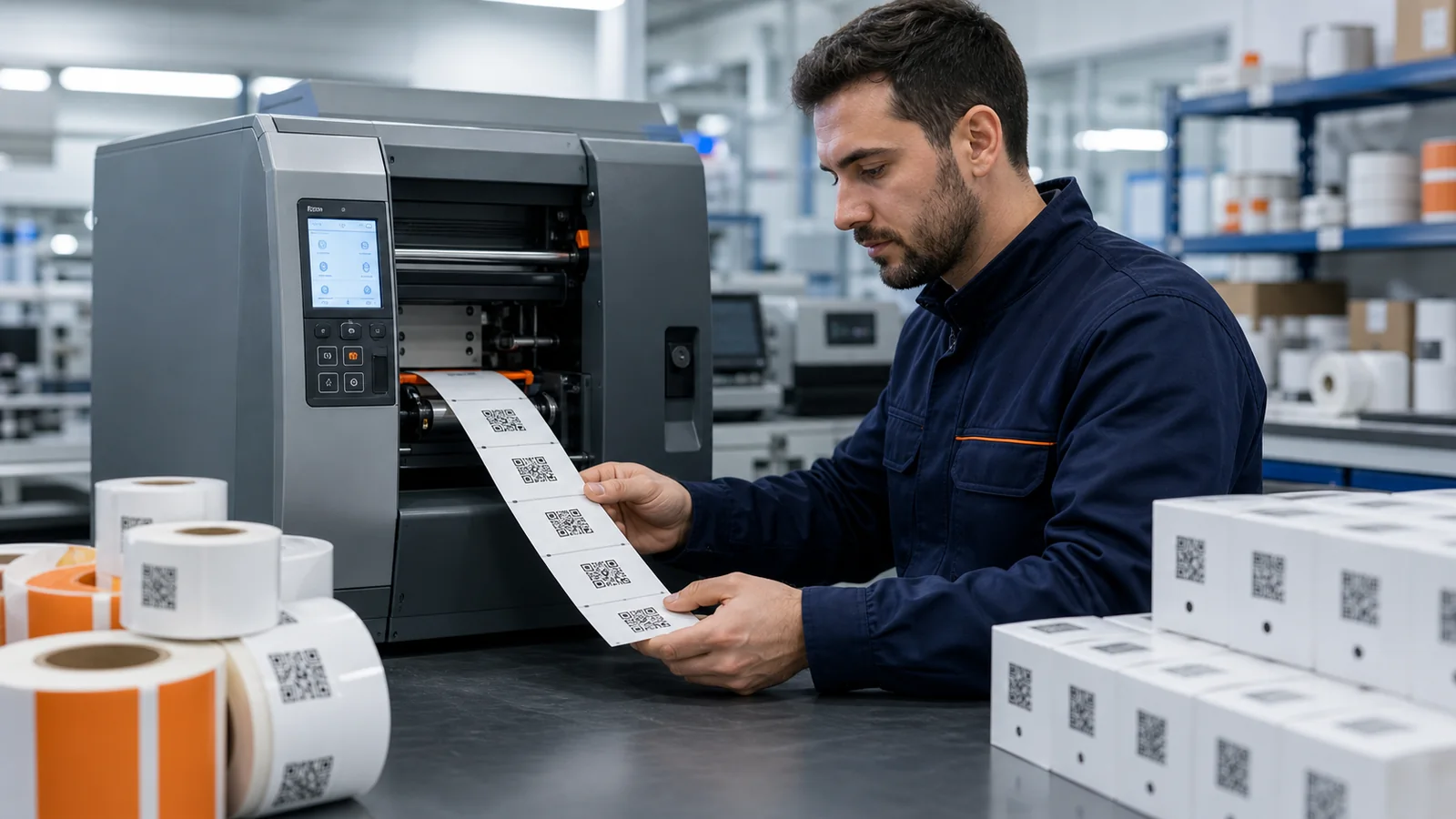
How to make DataMatrix codes readable in real conditions
A DataMatrix that cannot be scanned is a fine waiting to happen. Materials, printers and verification: what actually makes codes readable.

The complete e-Mark readiness checklist
Nine steps from confirming scope to your first real batch: company data, product cards, ATGAA codes, packaging levels, API access and equipment.